Kitengela, Kajiado County, Kenya – In the dusty bustle of Kitengela, a Nairobi suburb pulsing with urban ambition, John Morgan (Not the exact name) clips hair with steady hands that once gripped a shepherd’s crook amid gunfire. A Congolese refugee who fled war-torn eastern DRC a decade ago, Morgan has turned trauma into enterprise. His barber shop, now employing five and sustaining two families, stands as a testament to how targeted support can unlock refugee potential in Kenya’s informal economy.
Morgan’s story begins in the green hills of his Congolese homeland, where cattle herding defined life. “We were grazing our cows in the mountains,” he recalls, voice steady but eyes distant. “I was with two friends, Richard and Eric. Suddenly, armed men—my ‘troops,’ they called themselves—opened fire.” Chaos erupted. Richard fell dead. Morgan bolted to a nearby village; Eric vanished into the forest. Fear gripped them: these militias didn’t just kill—they looted livestock, leaving families destitute. Morgan’s own household lost 85 cows and 20 sheep. “They take everything,” he says. With surviving kin, he fled in early December 2015, crossing Rwanda and Uganda on a grueling month-long trek. Starvation stalked them; resources dwindled. They arrived in Kenya at the end of January 2016, starting from zero.
Life in Kenya was a grind of casual hustles—hawking watermelons, phone accessories, mandazi, and chai. Despite a university degree in business administration, formal work eluded him. “We have papers, but jobs demand work permits we can’t get,” Morgan explains. Barriers persisted: refugee status barred recognition of qualifications, trapping skilled people in survival mode.
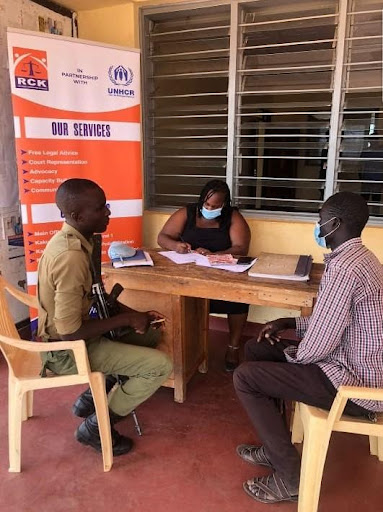
Discovery came through community whispers. During a mental health session by the Refugee Consortium of Kenya (RCK), Morgan shared his struggles. It was during this low point that RCK project Officer invited him to a training implemented by RCK under the Wezesha projectin partnership with the IKEA Foundation. He enrolled for the entrepreneurial economic empowerment training, which aims at creating an enabling environment for refugees and host communities to achieve social rights and economic self-reliance. Morgan joined 25 other participants for a 5-day in-person entrepreneurial skills and business training. “It refreshed my skills,” he says. “I learned record-keeping, separating business from personal money, savings, and record-keeping for profit.” Post-training, RCK provided in-kind startup capital, which enabled me to buy additional items totaling at least 50,000, including two clippers, shaving machines, towels, bumpers, and a sleek sink. These tools elevated his modest barber shop from ramshackle to professional.

Business Boom and Ripple Effects
The transformation was swift. Before, daily profit earnings were at least 800 – 1000, but blurred lines meant zero profit. Rent went unpaid; loans piled up. “I didn’t track where money went,” Morgan admits.
Now, with meticulous ledgers logging every transaction, loans, expenses, assets, good days yield. After costs like spirits, aftershave, and scrubs (which last a week), profits hit approximately 1,500 – 2,000 shillings daily. He expanded, adding a massage room for back and body treatments. Staff grew from one to four workers – his brother (partner), a refugee barber, and two Kenyan single mothers from the host community. “The Kenyans have kids in school now and can now even offer their kids a decent life,” Morgan says proudly. “My two children are in a good school too, and also able to provide for my family.”
The Wezesha project’s intervention echoes broader efforts to bridge the divides between refugee and hosts through economic inclusion. In Kitengela’s mixed neighbourhoods, Morgan’s shop fosters integration, one haircut at a time, while challenging stereotypes of refugees as burdens!
Morgan’s journey underscores a simple truth, that when given tools and trust, refugees don’t just survive, they build. “The counseling and training healed my trauma,” he reflects. “I saw purpose again.” From the mountains of Congo to Kitengela’s chairs, his story illuminates the quiet power of opportunity in the shadow of displacement.