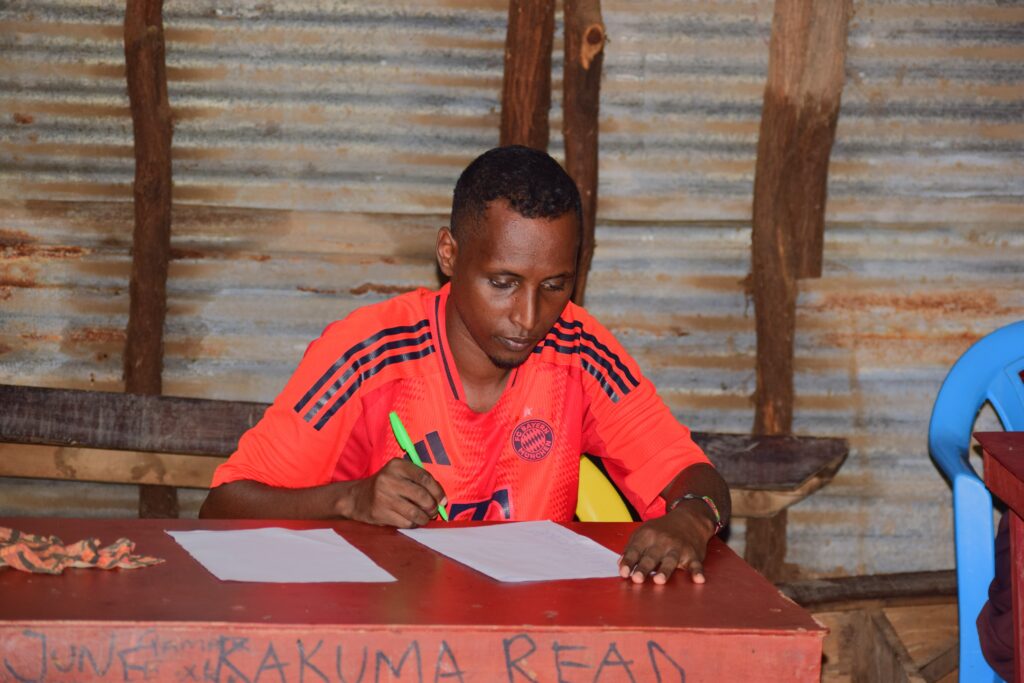
Kakuma, Turkana County, Kenya – In a modest, lively co-shared centre nestled within the vibrant sprawl of Kakuma refugee camp, Daud Warsame greets visitors with warmth that belies a life shaped by displacement, loss, and unyielding hope. Born in Mogadishu, Somalia, in 1987 as the youngest of four, Daud’s earliest memories are tinged by the chaos of civil war. His family, like tens of thousands, braved a perilous escape as violence engulfed their homeland, journeying across borders and uncertainty. “We came as a convoy,” he recalls. “Fifty, maybe thirty thousand, all fleeing for our lives, and Kenya welcomed us.” He was the youngest of four children in a family that would, unbeknownst to him then, have to navigate both separation and survival. “I was the last in my family by that time. War broke out, and our government collapsed. I was a child, too young to walk,” Daud recalls.
Daud remembers traveling in a huge convoy, fleeing violence alongside up to 50,000 desperate people. “We came as a convoy, maybe thirty or fifty thousand, all running from war.” Their first refuge was across the border in Kenya, where they were welcomed by the Somali-Kenyan community in Garissa, specifically a dusty frontier outpost called Habswine, “the place of the big dust.” But safety was short-lived. Within weeks of arrival, disease outbreaks, including cholera and other mysterious illnesses, swept through the settlement. “We were many, but people started dying in large numbers. Medical care was short, and people were scared.” Facing a new threat, many, including Daud’s family, made the difficult decision to return to Somalia, settling near the border in El Wak.
Years passed, marked by uncertainty and longing for security. “My family returned to Kenya before me, around 1996 or 1997. I stayed in Somalia for over a decade.” Eventually, in 2005-2006, Daud himself made the journey back to Kenya, this time determined to reclaim the possibility of education and stability.
The Road to Empowerment: Education Amid Uncertainty
In Kenya, Daud seized opportunities that had eluded him during years in limbo. He completed his secondary education, sitting for his Kenya Certificate of Secondary Education (KCSE) exams, an experience that tethered his ambitions to a new sense of possibility. Yet, the shadows of displacement lingered. He first stayed in Dadaab, another vast refugee settlement, before eventually joining his relocated family, which relocated due to insecurity in Kakuma by 2012.
In Dadaab, Daud’s commitment to community service began to shine. He joined the Refugee Consortium of Kenya (RCK) as a paralegal monitor, providing legal support and civic education within the camp, and learning first-hand about the legal and psychosocial challenges faced by refugees. “RCK was my first employer,” he says, a detail he kept closely guarded until recently. His engagement brought invaluable exposure to rights-based community work, seeds that would take root in Kakuma years later. In Kakuma camp, Daud gradually became involved in local initiatives aiming to support refugees beyond basic humanitarian aid.
Adapting to Crisis: The Inception of Kakuma Reads
When COVID-19 swept through in 2020, the sense of vulnerability in the camp deepened. Lockdowns, isolation, and misinformation posed existential threats to already-marginalized communities. Recognizing the urgent need for clear, accessible health information, Daud rallied a team of fellow refugees and set out to make a difference.
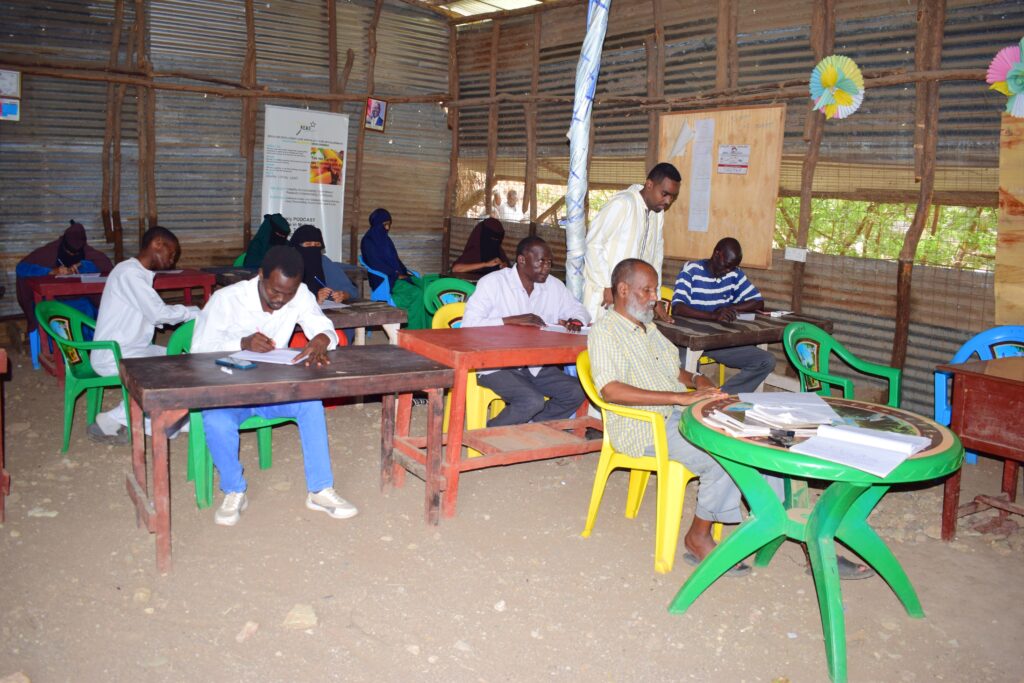
“Kakuma Read was born out of necessity, but also belief,” he recounts. The group initially translated public health content about COVID-19 into local languages and shared it using every means available, including Bluetooth, WhatsApp, and social media. “As we translated pandemic information, we saw deeper issues, including mounting mental health challenges, emerging social conflicts, and educational gaps,” Daud says. Recognizing these new realities, Kakuma Read CBO rapidly evolved its focus to include psychosocial support, peace-building, and foundational adult education for those whose schooling had been interrupted by crisis. In 2022, the group moved operations to a larger community space, formalizing Kakuma Reads as a beacon for those hungry for knowledge, healing, and togetherness.
As Kakuma Read’s ambitions grew, so did the need for formal recognition. Daud describes the regulatory tangle with candid frustration, a journey of months spent navigating bureaucracies, offices, and shifting rules. After initial setbacks at government centres in Lodwar and failed promises of registration at other agencies, hope flickered. The wait stretched across years. “We left our documents, but nothing moved. Eventually, I knew I had two options left: NRC and RCK. I approached RCK first.”
RCK Intervention: The Turning Point
The Refugee Consortium of Kenya (RCK), long recognized for legal aid in supporting unregistered Community-Based Organizations (CBOs), Refugee-Led Organizations (RLOs), and Women-Led Organizations (WLOs) in Kenya’s Camps, including Kakuma and Dadaab, in the RLOs registration process, this was no stranger to Daud. He had worked as a paralegal monitor in Dadaab in his twenties, quietly absorbing the organization’s ethos of practical compassion. But it was not that prior connection that brought Kakuma Read CBO to RCK’s doors in 2022; it was a need.
“We were just lucky,” Daud reflects with humility. “RCK had a few clients at that moment, and they also supported us throughout the process.” The RCK not only trained key team members, including the chairperson, vice-chair, treasurer, and secretary, but also walked us through the intricacies of constitutions, minutes, and financial bookkeeping. “They told us to make sure we produce the finest documents as per the guidance and comply with the knowledge.”
With guidance, Kakuma Read underwent a series of thorough vetting processes by the Social Department Officer, Department of Refugee Services, and UNHCR. Mandates changed, compliance steps increased. The final wait was the hardest; the process from July 2022 to October 2023 tested their resolve, but in the end, the certificate of registration arrived. “Through the assistance of RCK, we made it and got a certificate,” Daud says with pride.
Growing Knowledge, Strengthening Community
Central to Kakuma Read’s transformative work has been the psychosocial peacebuilding initiative, supported by RCK’s partnership with the IKEA Foundation through training and in-kind support during community and school-based outreaches. Through a series of targeted trainings and capacity-building workshops, Daud and his team became equipped to tackle the intertwined challenges of trauma, conflict, and social cohesion. They learned to create safe, restorative spaces, both within the camp and in local schools, where community members could speak openly about their struggles and begin the journey of healing together.
These safe spaces are more than physical rooms; they are environments shaped by empathy and active listening, where the cycle of isolation is gently broken. Sharing personal stories of pain and recovery has become a cornerstone. The trainings have helped us in improving our approach to psychosocial support of refugees. This room is a safe place for the refugees. We always allow them to come and tell their stories. Through the help of RCK, who at some point joined us and supported us both in-kind and offered expertise during the sessions, allowing the refugees to speak in their local language and translate,” said Daud. “Through stories they share, most of them realise that they went or are going through the same pain or situation, and that helps them in their healing process because they know that they are not alone,” he added.
Combining the training on psychosocial support and conflict mitigation and resolution, they are supporting in addressing key challenges affecting the people they serve. “Before, we just delayed problems, hoping they’d go away. Now, we map out the conflict, understand everyone involved, and help the community process their experience. It’s about lasting solutions, not temporary fixes,” Daud explained. Through this storytelling and community dialogue, individuals found solidarity, learned new coping strategies, and felt seen, often for the first time since displacement.
The sustained mentorship by RCK was vital in helping Kakuma Reads formalize its work and nurture a culture of continuous development. Trainings in conflict prevention, mental health support, and organizational governance did more than improve technical capacity; they helped Kakuma Reads’ members become confident trainers and advocates themselves. Now, they not only serve as first responders for psychosocial distress and camp tensions, but also empower others through knowledge transfer. Their center has blossomed into a trusted hub where resilience is as much about mutual support as it is about individual effort. “Each training session gave us new tools to help our people,” Daud reflected. “But more importantly, it taught us the value of listening to stories, to pain, to healing. We are building not just an organization, but a family of hope and trust.”
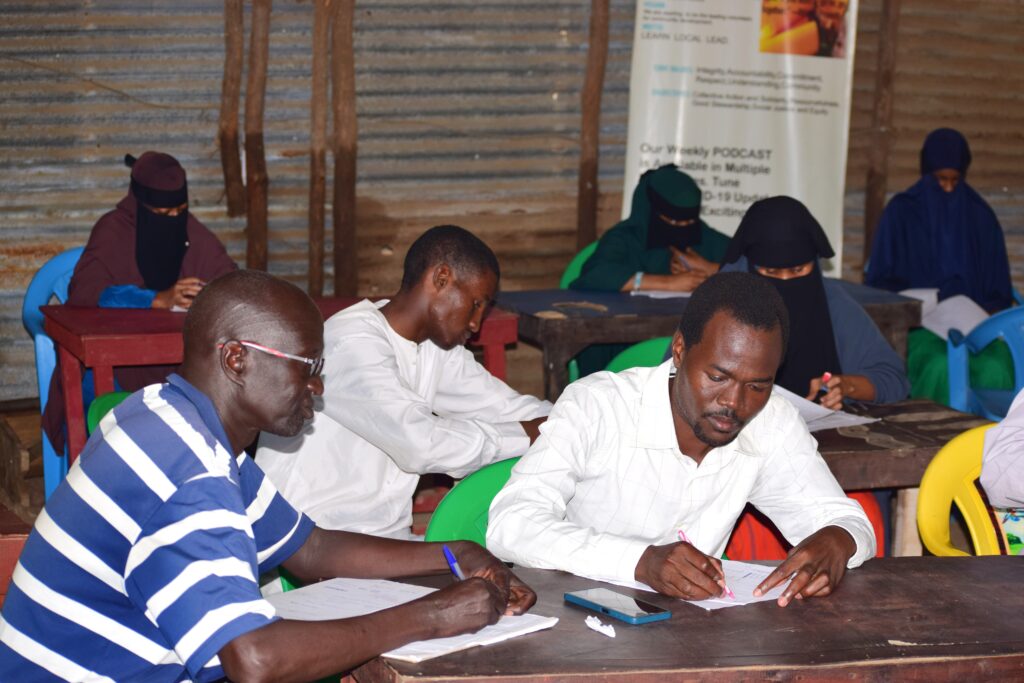
Today, the organization boasts a core of 10 resilient members, some relocated on scholarships or for resettlement, yet all bound by the desire to uplift their community. In 2024 alone, more than 150 learners participated in its foundational literacy and numeracy program, with 80 celebrating graduations, a proof of local demand and collective will.