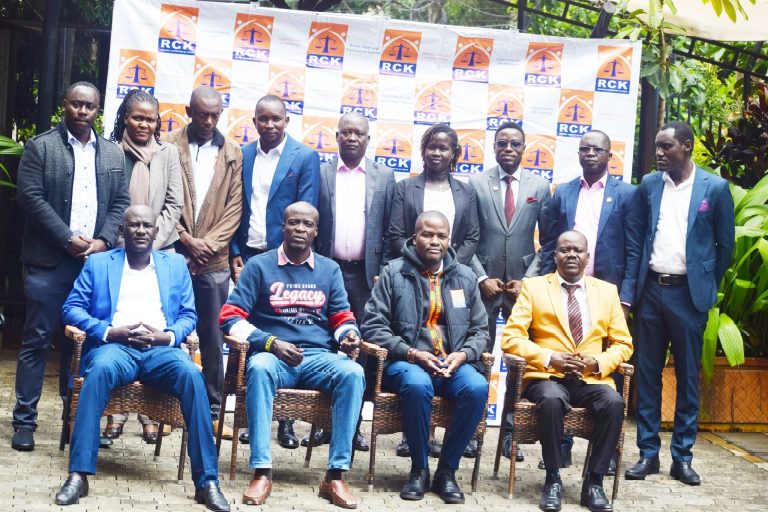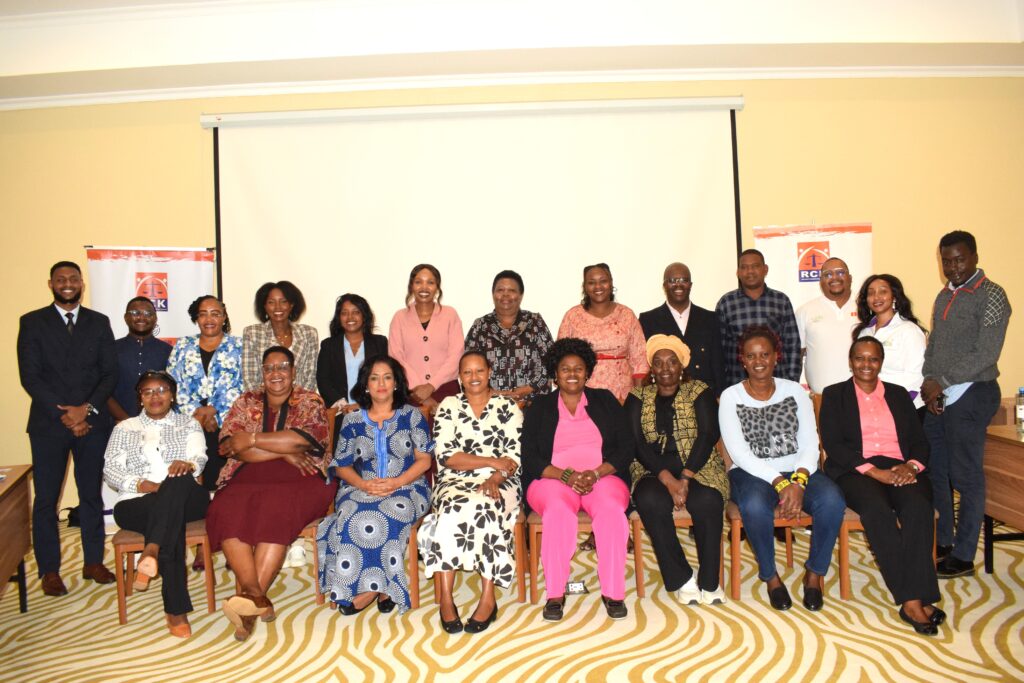
Figure 1 Group Photo: Representatives from Kenya Women Parliamentary Association (KEWOPA), Refugee Consortium of Kenya (RCK),Gender Violence Recovery Centre (GVRC), National Gender and Equality Commission (NGEC) and Nairobi County, State Department of Gender Affairs.
Strengthening protection for women and girls affected by forced displacement requires coordinated action, progressive legislation, effective implementation, and sustained political commitment. This was the central message at a high-level advocacy dialogue convened by the Refugee Consortium of Kenya (RCK) in partnership with the Kenya Women Parliamentary Association (KEWOPA), the Gender Violence Recovery Centre (GVRC), the National Gender and Equality Commission (NGEC), the State Department for Gender Affairs, and the Nairobi County Education, Culture, Sports, Youth, Gender and Social Services Sector under the Haki na Ushirikiano Project.
Supported by the Embassy of the Kingdom of the Netherlands and implemented in collaboration with the Kenya National Commission on Human Rights (KNCHR), the two-day engagement brought together Members of Parliament, constitutional commissions, government institutions, development partners to examine legal and policy gaps affecting refugee and host community women and girls, particularly in relation to Gender-Based Violence (GBV), access to justice, and gender-responsive governance.
A key highlight of the discussions was a shared recognition that while Kenya has established progressive legal frameworks including the Refugees Act (2021), the Sexual Offences Act (2006), and the Prohibition of Female Genital Mutilation Act (2011), many women and girls continue to face barriers in realizing the protections these laws guarantee.
“A law can only change lives when it is understood, implemented, and accessible to the people it is meant to protect.”
For refugee women and girls, the journey toward justice is often shaped by intersecting vulnerabilities. Displacement, limited access to legal information, social stigma, language barriers, and inadequate coordination among institutions can make reporting violence and accessing survivor-centred services particularly difficult. Participants observed that while legislative frameworks exist, implementation remains uneven, especially in refugee-hosting areas where protection needs remain the highest priority.
Drawing on RCK’s extensive work with refugee and host communities, the dialogue provided a platform to highlight lived experiences in national policy conversations. Evidence gathered through legal aid, protection programming, and community engagement highlighted persistent challenges in preventing and responding to Gender-Based Violence, as well as barriers to accessing justice.
Participants emphasized that meaningful policy reform must be informed by the realities experienced by women and girls on the ground. Parliament, particularly through KEWOPA, was recognized as playing a critical role in ensuring that legislation reflects these realities while strengthening oversight of implementation.
The discussions also explored opportunities to strengthen the implementation of the National Policy on Gender and Development and improve coordination between Parliament, national government, constitutional commissions, county governments, and civil society organizations to deliver more responsive protection systems.
Throughout the engagement, members reaffirmed the importance of legislative leadership in advancing gender equality and protecting the rights of women and girls living in refugee and host communities. The dialogue underscored Parliament’s unique role in Strengthening oversight of the implementation of existing legislation, championing gender-responsive and refugee-inclusive policy reforms, supporting adequate financing for survivor-centred protection services, enhancing accountability mechanisms for GBV prevention and response, and promoting collaboration between national and county institutions to improve access to justice.
Participants noted that stronger parliamentary engagement is essential to ensuring that policies move beyond paper commitments to tangible improvements in the lives of women and girls.
For the Refugee Consortium of Kenya, the dialogue represents more than a standalone engagement. It reflects the organization’s broader commitment to influencing public policy, strengthening legal protection frameworks, and ensuring that the voices of refugees and host communities shape national decision-making.
Through strategic advocacy, evidence generation, legal aid, and partnerships with parliament and key institutions, RCK continues to advance reforms that promote gender equality, strengthen access to justice, and uphold the rights and dignity of refugees and asylum seekers.
As Kenya continues implementing progressive refugee and gender legislation, participants agreed that sustained dialogue, parliamentary leadership, and collective action will be essential to ensuring that every woman and girl can live free from violence and access the protection and justice they deserve.
The meeting closed with a shared commitment to transform the recommendations into concrete legislative, policy, and institutional actions that strengthen protection systems and build a more inclusive future for both refugee and host communities.