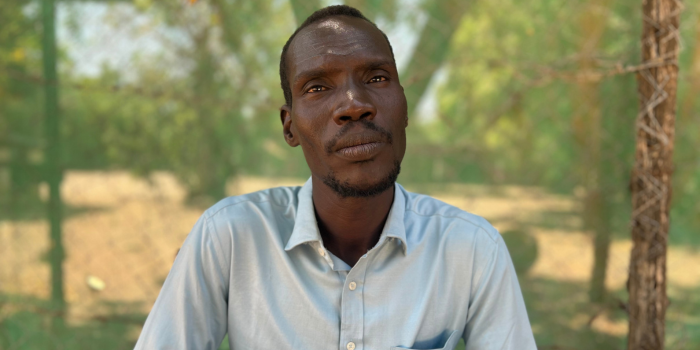
INTERVIEW WITH SHADRACK KUYOH, PROGRAMME OFFICER AT REFUGEE CONSORTIUM OF KENYA (SOURCE: UNWOMEN):
“One-woman victim of violence is one too many and one woman supported and empowered to survive and thrive is one enough.” — Eunice Ndonga Githinji, Executive Director of Refugee Consortium of Kenya
Refugee Consortium of Kenya (RCK), a local non-governmental organization, aims to protect the rights of migrants forced to flee, host communities, internally displaced persons, stateless people and victims/survivors of trafficking. It provides legal aid and psychosocial services, engages in policy advocacy, promotes women and girls’ empowerment, peace and social justice, and advances research, learning and knowledge management to raise awareness and share good practices.
Supported by the UN Trust Fund to End Violence against Women (UN Trust Fund), under a special funding window to prevent and end violence against refugees and those internally displaced in humanitarian settings, RCK is implementing a project in Nairobi and Garissa counties to address violence against refugee women and girls and in the host community. We talked with Shadrack Kuyoh, Programme Officer at RCK.
Displacement puts many women and girls at high risk of violence. What types of violence are displaced and refugee women and girls facing in Kenya in the context of the current forced displacement and refugee crisis?
Humanitarian crises increase the risk of sexual and physical violence against displaced women and girls. They face multiple, complex forms of violence, such as sexual and physical violence including by an intimate partner, harmful traditional practices (e.g. child marriage and female genital mutilation); labor exploitation, especially of women working in the informal sector; sexual exploitation and abuse, especially involving humanitarian workers; and human trafficking.

What steps does your organization take to identify and support survivors of violence?
We recruit and train community workers who help mobilize community members to raise awareness, and serve as focal points for survivors of sexual and gender-based violence in the community, and provide psychological first aid and referrals to other services.
If we are able to identify survivors early enough we can ensure timely intervention. There has to be a deliberate effort in eliminating constraints — for instance, language and location — to meet them where they are and guarantee the participation of women in matters concerning violence against women and girls. Additionally, it is important to ensure that the views of every woman are represented, and their diverse opinions are heard and considered.
How do you address this violence in such challenging contexts?
We create awareness to change norms and beliefs that encourage and/or tolerate violence against women and girls. As a result, we have witnessed a 50% average increase in support for survivors of violence, where community leaders seek further information to better handle VAW/G cases reported, and increased referrals for survivors to all available services.
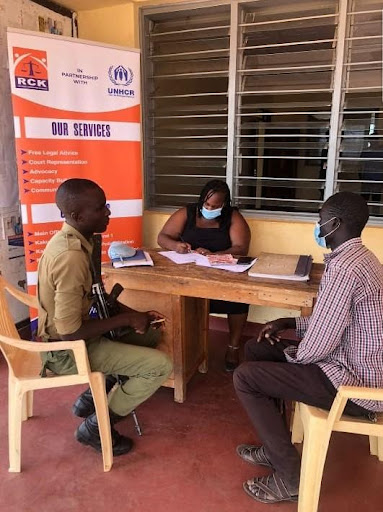
In concrete terms, we provide counselling, timely legal aid, representation and advice to survivors of violence. We also offer training to survivors on business skills and financial literacy, and provide them with economic empowerment grants so they can start businesses and gain economic independence.
Why is it important for your project to strengthen the capacity of law enforcement in handling cases of violence against women and girls?
Law enforcement officers require technical legal support when investigating cases of violence against women and girls. They also need skills on how to provide psychological first aid to mitigate secondary trauma. In Kenya, high turnover of law enforcement officers calls for continuous capacity building to strengthen their response to cases of violence against women and girls.
Since friendly and confidential reporting spaces of cases of violence were established, there has been improved evidence collection and preservation as well as increased court attendance by investigating officers to tender evidence. Our training therefore focuses on all these areas.
Additionally, when women are meaningfully integrated in law enforcement and allocated specifically to gender desks, access to legal recourse for survivors of sexual and gender-based violence is more likely assured and reporting of such cases increases.

Has this been successful?
Survivors in the community have reported positive change in the attitudes of law enforcement officers towards them. Over the last three years, there has been an increase of 61% in survivors who witnessed a positive change in attitude and conduct of the officers and reception of the cases.
How has UN Trust Fund support empowered your organization to achieve its goals?
It enabled us to extend the provision of legal protection to the most vulnerable groups, including women and girls in the refugee community as well as in the host community. It also supported the strengthening of project staff through a comprehensive and structured online training on project management, which improved our staff’s skills to improve effective service delivery to beneficiaries beyond the UN Trust Fund-supported project.
The grant allowed us to work in a safe environment during the COVID-19 pandemic and to adapt our project. We leveraged our partnership with the Kasarani and Garissa police stations to scale up monitoring and intervention in cases of defilement and underage pregnancies as a result of rape. We provided material support to these police stations so that women and children fleeing domestic violence can secure temporary refuge when coming in to report violence. We provided translators to assist survivors reporting cases, as well as laptops and internet connectivity so they could participate in the online court sessions when needed.
In May 2022, the UN Trust Fund visited RCK and other grantee organizations in Kenya, with SIDA (the Swedish International Development Cooperation Agency), to learn more about their meaningful work to prevent and end all forms of violence against women and girls.